

We Are Participating
UNICEF Canada defines participation as having the freedom and capacity to be active in decisions that affect one’s own life—within families, schools, community organizations, social movements, and civic or political life. It includes expressing one’s identity, building a sense of agency, and accessing reliable information and avenues for self-expression. Our research asks: How are young people engaging online as informed digital citizens in social and political affairs?
Watch Digital Portraits
Hear directly from Canadian Gen Z youth in these short videos. Filmed 2024–2025.
 to choose from 30 videos

Research Snapshot
by: Dr. James Stinson
Canadian youth are growing up as “always on” - participants in complex digital environments that shape how they learn, socialize, and act civically.

Digital technology can expand democratic participation, creativity, and access to information
(Bennett, Wells, & Rank, 2009; Wilson & Johnson, 2014).
Yet these same technologies can also magnify risks of surveillance, harassment, and disinformation (Fraser, 2007; Al-Rawi, 2025).
The notion of “digital citizenship” captures this tension. Digital citizenship includes the technical skills and the rights, responsibilities, and capacities needed to participate safely and effectively in networked public life (Jones & Mitchell, 2016; Al-Zahrani, 2015).
Within the Canadian context, youth digital citizenship is shaped by both national and global forces. Canada’s first State of Youth Report emphasized that young people want meaningful roles in shaping digital policies and programs (Heritage Canada, 2021). Comparative studies in Europe and the Middle East show that factors affecting online participation include not only access but also trust, perceived efficacy, and inclusion (Al-Zahrani, 2015; Catalina-García et al., 2018).
Likewise, Harris and Johns (2021) argue that moving from a “risk and resilience” paradigm toward a “global digital citizenship” approach requires systems that foster agency rather than paternalistic control. Tilleczek and Campbell (2019) similarly stress that youth engagement online is embedded in social structures of inequality and intergenerational power.
This review synthesizes recent research to examine two interwoven themes: the barriers impeding youth digital citizenship and the opportunities that can be leveraged to overcome those obstacles. It concludes with evidence-based policy recommendations for educators, governments, and civil society.
Barriers to Youth Digital Citizenship
A major barrier to youth empowerment in digital civic life is online risk and cyber-victimization. Cyberbullying and harassment remain among the most cited deterrents to youth participation in online civic spaces. Statistics Canada has reported that roughly one in four youth experience some form of cyber-victimization annually, with disproportionately high rates among transgender or nonbinary youth, sexual-minority youth, and those with chronic conditions or disabilities (Hendry, Hellsten, McIntyre, & Smith, 2023). Hendry et al. (2023) found that stakeholders in Western Canada view prevention and intervention as requiring whole-community approaches, yet these are inconsistently funded. For children and youth with autism, screen use brings benefits but also distinct risks; Mayer et al. (2024) show that caregivers and clinicians need tailored guidelines to support healthy engagement. Without such supports, many young people self-censor or withdraw from digital spaces where harassment is likely, reducing their capacity for civic action (Moraleja, 2023).
A second barrier to youth empowerment as digital citizens is the specter of privacy intrusion and surveillance by parents, schools, and platforms. Adorjan and Ricciardelli (2018) document how Canadian youth perceive school monitoring and parental controls as sometimes protective but often heavy-handed and undermining of autonomy. In their follow-up work, they emphasize that young people develop “privacy workarounds” to evade monitoring, which may paradoxically increase risk (Adorjan & Ricciardelli, 2019). Kane, Ng-A-Fook, Radford, and Butler (2016) argue that urban schools’ use of digital technologies can render youth “placeless” and under constant observation, complicating efforts to build authentic civic engagement. At a broader level, Fraser (2007) contends that Canadian internet policy has historically treated citizens as subjects to be civilized, framing surveillance as necessary for order rather than a potential infringement of rights.
“1 in 4 youth experience some form of cyber-victimization annually, with disproportionately high rates among transgender or nonbinary youth, sexual-minority youth, and those with chronic conditions or disabilities.”
Misinformation, disinformation, and algorithmic opacity.
Youth also navigate an increasingly polluted information environment. Al-Rawi (2025) analyzes multimodal trolling campaigns targeting Canada and shows how memes and doctored videos blend humor and hate to influence young audiences. DeCillia and Clark (2023) describe how journalism schools and newsrooms are scrambling to teach fact-checking in the face of “fake news.” Naffi et al. (2025) report on an experiential learning project in which Canadian youth confronted deepfakes and disinformation, finding that reflection and peer discussion increased their resilience.
Kemei et al. (2022) reveal that online mis/disinformation disproportionately affects Black communities, including youth, underscoring the need for culturally responsive interventions. Gintova (2025) highlights that even government social-media accounts can inadvertently disseminate misinformation, complicating trust. Gruzd, Mai, and Soares (2024) show that warning labels can reduce misinformation sharing, but effects vary by context. Without transparency about algorithms and data practices, youth cannot easily discern how content is prioritized (Brisson-Boivin & Johnson, 2024; Pavlounis, Pashby, & Sanchez Morales, 2023).
Compounding these risks is the uneven distribution of digital literacy and critical media skills. Access to devices does not guarantee the ability to interrogate sources or resist manipulative content (Brummer, 2025). Teachers themselves often feel underprepared to teach these topics, especially as platforms evolve (Brisson-Boivin & Johnson, 2024; Walters, Gee, & Mohammed, 2019). Buchan, Bhawra, and Katapally (2024) developed an evidence-based digital literacy program for youth, but uptake remains limited. Safouh et al. (2024) show that rural youth often hold weaker digital citizenship values due to lower connectivity and fewer training opportunities. Iskandar, Maksum, and Marini (2025) argue that even “digital natives” have gaps in understanding privacy, misinformation, and online civility.

Overlaying these technological constraints are social, identity, and equity dimensions. Marginalized youth—by race, gender identity, disability status, geographic location, or socioeconomic position—face heightened risks and reduced resources. Scholars stress that digital citizenship cannot be divorced from systemic inequalities. Abdi and Shultz (2013) find that marginalized youth—by race, gender identity, disability status, or socioeconomic position—are more likely to feel excluded from civic forums.
Pathak-Shelat and Bhatia (2019) describe how adult-managed online spaces can constrain youth civic participation globally. Estellés and Doyle’s (2025) systematic review concludes that much online safety education is anchored in a protectionist framing that undermines agency. McLean, Bergen, Truong-White, Rottmann, and Glithero (2017) show that Canadian youth are far from apathetic but identify clear supports they need to speak out. Without addressing these structural factors, “digital citizenship” risks becoming a luxury of privilege (Tilleczek & Campbell, 2019).
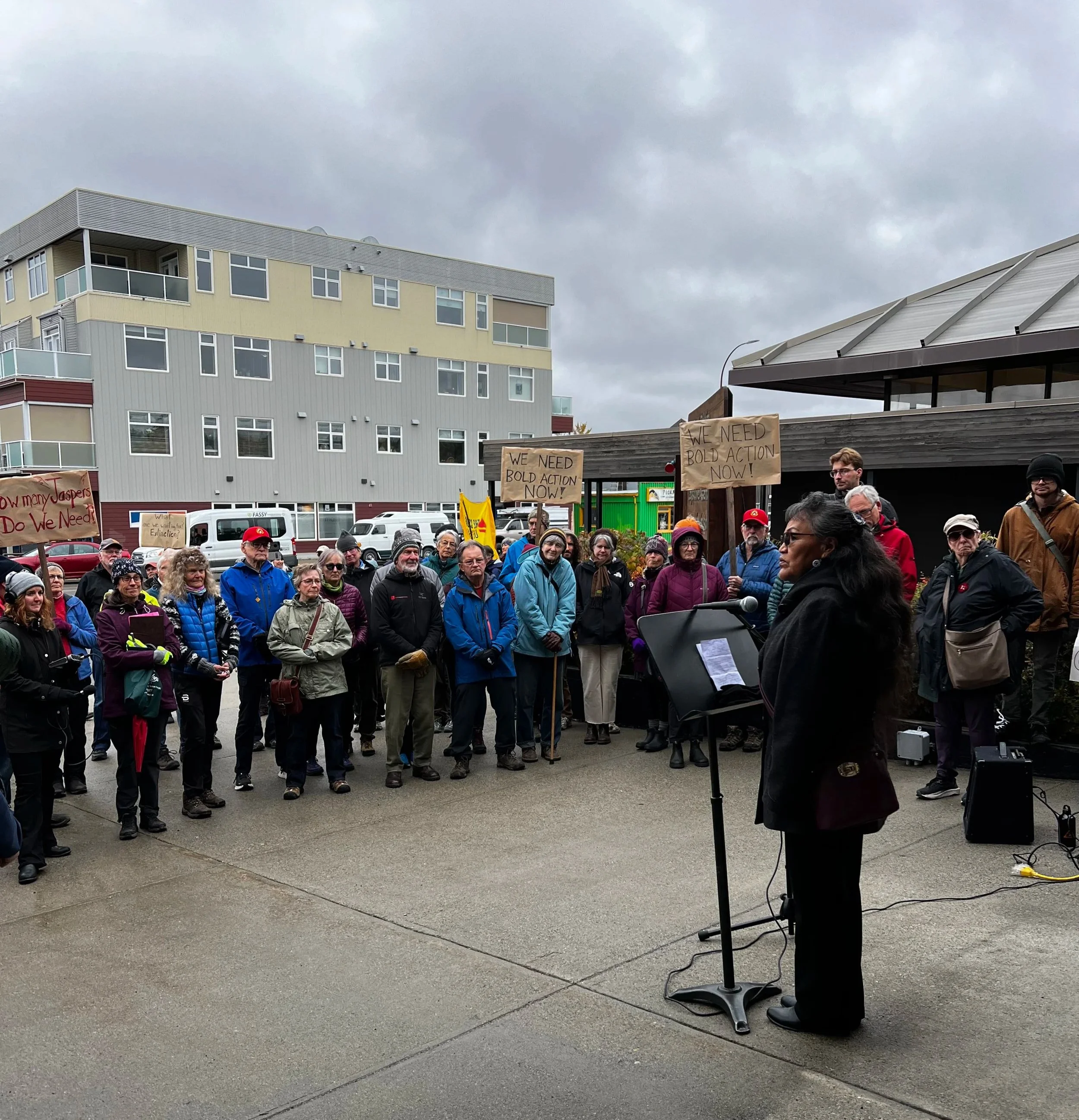
photo of Senior Climate Strike by: Sydney Sinclair
Opportunities for Empowering
Digital Citizenship
Despite these obstacles, the literature highlights promising opportunities for reimagining youth digital citizenship. At the forefront is deep integration of media literacies—not merely “stay safe” messages but scaffolded teaching of source evaluation, fact-checking practices, algorithmic transparency, and participatory civic tools (Brisson-Boivin & Johnson, 2024; Smith & Parker, 2021). MediaSmarts’ “Break the Fake” campaign shows how short videos can reduce misinformation sharing and increase verification behaviors (MediaSmarts, as reported in DeCillia & Clark, 2023). Tamboer, Vlaanderen, Bevelander, and Kleemans (2024) demonstrate that interventions to increase fake-news literacy can be effective if developmentally appropriate. Pavlounis et al. (2023) describe how the “Questioning Images” tool links digital, visual, and civic literacy to combat mis/disinformation. Embedding such literacy across multiple subjects and grade levels can help build youth capacity for reflective, engaged digital citizenship (Davis, 2020a, 2020b).
A second opportunity lies in youth participation and co-creation. Rather than treating youth as passive recipients of policy and instruction, many scholars advocate involving them directly in designing curricula, safety measures, and digital-citizenship frameworks (Abdi & Shultz, 2013; Adorjan & Ricciardelli, 2018; Shanmugam & Findlay, 2024). Co-creation enhances relevance, trust, and uptake of initiatives (McLean et al., 2017; Shultz, Pashby, & Godwaldt, 2017).
Pathak-Shelat and Bhatia (2019) show that when young people negotiate adult-managed online spaces, they develop sophisticated civic strategies. Truong-White and McLean (2015) demonstrate how digital storytelling can foster transformative global-citizenship education. Karsgaard (2024) argues for futures of digital-citizenship education that embrace planetary politics and life itself, echoing Arshad-Ayaz, Andreotti, and Sutherland’s (2017) call for critical readings of youth “white papers.”
Institutional support also matters. Formalizing digital citizenship and media literacy in curricula, backed by funding, teacher training, and sustained resources, helps normalize youth capacity building. Formalizing digital citizenship and media literacy in curricula, backed by funding, teacher training, and sustained resources, helps normalize youth capacity building (Walters et al., 2019). Organizations such as MediaSmarts and the Canadian Internet Registration Authority already develop scalable tools to bridge gaps (Brisson-Boivin & Johnson, 2024).
Heritage Canada (2021) emphasizes the importance of including youth voices in federal initiatives. Programs like SAY-VAC mobilize South Asian youth as vaccine agents of change, illustrating how digital engagement can support public health and civic dialogue simultaneously (Kandasamy et al., 2022). Inclusive supports must also recognize the specific challenges faced by youth in remote, rural, or marginalized communities (Safouh et al., 2024) and those with disabilities (Mayer et al., 2024).
Efforts to expand the civic imagination of young Canadians is another opportunity. Several authors stress that digital citizenship should cultivate agency, resilience, and reflexivity rather than mere avoidance strategies (Estellés & Doyle, 2025; Mattson & Curran, 2017). Petit-Vouriot and Morden (2020) argue that Canadians need new narratives about democracy in the digital age. Tupper (2014) highlights how movements like Idle No More used social media to activate citizenship, activism, and dissent.
Turuba, Cormier, and Zimmerman (2024) show that youth use platforms like TikTok for mental-health information, suggesting that civic and personal wellbeing are intertwined. By centering equity and recognizing diverse experiences, initiatives can avoid exacerbating digital divides and instead nurture empowered, pluralistic digital publics (LeBlanc, Furlong, Leger, & Freiman, 2018; Leger, Djambong, LeBlanc, & Freiman, 2018).

Summary and
Policy Recommendations
The literature points to several guiding principles and policy pathways for Canada.
1. Curricula must evolve to embed digital citizenship and critical media literacy across grades -
not just teaching how to avoid harm but how to act with purpose in digital civic spheres (Walters et al., 2019; Davis, 2020a, 2020b). Governments and education ministries should codify such standards, adapt them to local contexts, and ensure flexibility for co-design with youth (Shanmugam & Findlay, 2024).
2. Professional development for educators is essential.
Teachers need sustained support, pedagogical materials, and collaborative networks to keep pace with evolving platforms, threats, and affordances (Wilson & Johnson, 2014; Mattson & Curran, 2017).
3. Youth voice must be institutionalized in policy design, program evaluation, and school governance (McLean et al., 2017; Shultz et al., 2017).
Youth who see themselves as contributors rather than subjects of regulation will be more invested, creative, and critical participants (Heritage Canada, 2021).
4. Policy should explicitly orient beyond safeguarding toward empowerment -
reframing safety as a necessary foundation but not the ceiling of youth digital engagement (Estellés & Doyle, 2025; Bennett et al., 2009).
5. Equity must be central -
resources, connectivity, training, and support services must prioritize underserved and marginalized youth to ensure that digital citizenship does not become a luxury of privilege (Abdi & Shultz, 2013; Safouh et al., 2024).
6. Regulation of platforms must emphasize transparency and accountability.
Government or regulatory bodies should require disclosure of algorithmic logic, data practices, content-moderation policies, and affordances that influence user behavior (Fraser, 2007; Gruzd & Mai, 2020; Gruzd et al., 2024). Youth, in turn, should be supported to interrogate, contest, and negotiate with such systems (Pavlounis et al., 2023).
7. Policy must commit to ongoing research, experimentation, and evaluation—
tracking which interventions succeed or fail in diverse contexts, adjusting initiatives in light of shifting technologies such as AI or deepfakes, and centering historically marginalized voices in knowledge production (Naffi et al., 2025; Eldeeb et al., 2025).
Empowering Canadian youth as effective digital citizens requires more than technology access—it demands educational reform, institutional commitment, youth inclusion, regulatory transparency, and equity-oriented design. The barriers—risk, uneven literacy, surveillance, and exclusion—are real. Yet by embracing opportunities in media literacy, co-creation, curricular redesign, and inclusive policy, Canada can equip youth not only to survive digital spaces but to lead in shaping them. Such an approach aligns with calls for global digital citizenship that centers agency, justice, and collective wellbeing (Harris & Johns, 2021; Karsgaard, 2024). If implemented, these strategies could position Canadian youth at the forefront of building healthier, more democratic digital futures.


How to Cite this Text: Stinson, J. (2025). We Are Participating. In Digital Wellbeing Hub. Young Lives Research Lab. https://www.digitalwellbeinghub.ca/we-are-participating — Funded by the Government of Canada.
Resources
*
Resources *
Explore Resources By:
Research – Reports, articles, findings, background reading
For Youth – Interactive tools, guides, and activities designed for youth
Supporting Youth – Resources for educators, parents, policymakers, and practitioners

Understanding and Advancing Youth Civic Engagement in Canada (Summary)
Max Bell Foundation (2025)
National synthesis of literature, survey data, and interviews on youth participation in Canada (voting, digital engagement, volunteering, protest, and more).
Read Summary
Digital Media Literacy as a Precondition for Engaged Digital Citizenship
Brisson-Boivin & Johnson (CIGI, 2024)
Policy brief arguing that critical understanding, verification, and engagement are foundations for meaningful digital citizenship, with Canadian case evidence.
Read Brief (PDF)
Young Canadians in a Wireless World IV: Digital Media Literacy & Digital Citizenship
MediaSmarts
Findings on how youth assess credibility online and participate ethically in digital communities—part of the long-running YCWW research program.
Read Report (PDF)
Framing the Challenges of Digital Inclusion for Young Canadians
eQuality Project (Shade et al., 2019)
Qualitative study (focus groups ~13–17) on privacy, equity, and how networked spaces enable or constrain youth’s participatory digital citizenship.
Read Report (PDF)
NextGen Democracy: The 2024 Pulse Survey
Abacus Data & Apathy Is Boring (2024)
Canadian youth perspectives on democracy, government, and participation—tracking changes from 2023 and providing actionable insights.
Read Survey (PDF)
Digital and Privacy Rights: Resources for Children, Youth, Educators, & Parents
Information and Privacy Commissioner of Ontario
Resources for advancing digital rights, and preparing to be safe and responsible digital citizens.
Explore
Civix - Youth Programs
Civix
CIVIX is a Canadian charity started by young people. Their programming focuses on the themes of elections, government budgets, elected representatives, digital media literacy and civic discourse.
Visit Now
Next Gen Men - Resource Library
NextGen Men
Explore a thorough collection of books, reports and studies about boys, men and gender-based violence, gathered from ongoing research on masculinities. Next Gen Men is a Canadian nonprofit whose work is dedicated to change how the world sees, acts and thinks about masculinity.
Explore
Good Bot: Tech Policy
Good Bot
A Canadian non-profit made up of professionals in tech, law, design, social sciences, and policy who share a commitment to ensuring that digital and AI systems are fair, trustworthy, transparent and accountable. Read their policy papers, and explore resources.
Read Now
Hearing Unheard Moments (HUM)
Students Commission of Canada
Watch engaging media literacy videos featuring magician Lachlan performing card tricks while discussing media literacy, plus PSAs on astroturfing, bots, and deepfakes. Through comedy, arts, and Forum Theatre, HUM creates safer spaces for real dialogue on controversial, polarizing topics and helps youth address exclusion that can lead to radicalization.
Watch Now
4Rs Youth Movement (Canada)
Indigenous-youth-led
Free, youth-centered resources for leadership, reconciliation, wellbeing, and community connection—toolkits, guides, zines, reports, and videos co-created with youth.
Get Involved Explore Library
PlaceSpeak
Location-based Civic Consultation
Find and join public consultations in your area—surveys, discussions, and feedback on local projects—tied to where you live.
How It Works
Digital Moment
Montreal-based charity
Mobilizing communities with digital literacy education aligned to the UN SDGs. Programs for educators and youth across Canada.
Visit Site For Youth Take the Challenge
Tech This Out! (Podcast)
5Rights Foundation (Youth-led)
Youth hosts speak with experts and decision-makers about building a safer, rights-respecting digital world—and how young people can drive change.
Listen
Apathy is Boring
Canada-wide youth civic engagement
Helping young people find their lane in democracy—education, projects, and pathways beyond voting to shape the conditions you live in.
Get Involved
Click if you Agree (Game)
MediaSmarts (Grades 7–9+)
Interactive game to build confidence reading privacy policies and terms of use—useful for anyone who clicks “I agree.”
Play NowExplore More Dimensions of Wellbeing
Complete the Survey!
Join the research conversation and see what others are saying (no email required).
View Live Results
Abdi, A. A., & Shultz, L. (2013). Citizenship and youth social engagement in Canada: Learning challenges and possibilities. Sisyphus—Journal of Education, 1(2), 54-74.
Adorjan, M., & Ricciardelli, R. (2018). Cyber-risk and youth: Digital citizenship, privacy and surveillance. Routledge.
Al-Rawi, A. (2025). Multimodal disinformation trolling campaigns targeting Canada. Global Media and Communication, 21(2), 131-154.
Alvinca, M. F. (2025). Systematic Literature Review: Civic Engagement in The Context of Digital Citizenship. Jurnal Inovasi Pendidikan Dan Teknologi Informasi (JIPTI), 6(1), 1-11.
Al-Zahrani, A. (2015). Toward digital citizenship: examining factors affecting participation and involvement in the Internet society among higher education students. International Education Studies, 8(12), 203-217.
Arshad-Ayaz, A., Andreotti, V., & Sutherland, A. (2017). A critical reading of The National Youth White Paper on Global Citizenship: What are youth saying and what is missing?. International Journal of Development Education and Global Learning, 8(2).
Bell, B. (2005). Children, youth, and civic (dis) engagement: Digital technology and citizenship. http://hdl.handle.net/1807/32142
Bennett, W. L., Wells, C., & Rank, A. (2009). Young citizens and civic learning: Two paradigms of citizenship in the digital age. Citizenship studies, 13(2), 105-120.
Brummer, L. (2025). Conceptualizing Digital Awareness: Introducing a Definition via a Scoping Review of Digital Literacy and Digital Citizenship. Innovations in Pedagogy and Technology, 1(2), 41-55.
Buchan, M. C., Bhawra, J., & Katapally, T. R. (2024). Navigating the digital world: development of an evidence-based digital literacy program and assessment tool for youth. Smart Learning Environments, 11(1), 8.
Brisson-Boivin, K., & Johnson, M. (2024). Digital media literacy as a precondition for engaged digital citizenship. Centre for International Governance Innovation.
Catalina-García, B.; López de Ayala López, M. C; Martín Nieto, R. (2018). Social media and the political-civic participation of young people. A review of the digital citizenship debate.
Doxa Comunicación, 27, pp. 81-97. https://doi.org/10.31921/doxacom.n27a4
Davis, A. (2020). Digital Citizenship in Ontario Education: A Concept Analysis. in education, 26(1), 46-62. https://doi.org/10.37119/ojs2020.v26i1.467
Davis, A. (2020). Democratic Potential in Ontario Education: The Role of Digital Technology in Developing Democratic Citizens. Canadian Journal for New Scholars in Education/Revue canadienne des jeunes chercheures et chercheurs en éducation, 11(2), 100-108.
DeCillia, B., & Clark, B. (2023). Fake news and fact-checking: Combating misinformation and disinformation in Canadian newsrooms and journalism schools. Facts Frict: Emerg Debates, Pedagog Pract Contemp Journal, 3(1), 86-105.
Duche-Pérez, A. B., Vera-Revilla, C. Y., Gutiérrez-Aguilar, O. A., Montesinos-Chávez, M. C., Valdivia-Loaiza, A. H., & Flores-Vilca, I. V. (2023, September). Digital Culture, Youth, and Citizenship: A Systematic Review. In International Conference on Communication and Applied Technologies (pp. 549-558). Singapore: Springer Nature Singapore.
Eldeeb, Sohayla, Salman Fitrat Khan, Lynn-Everdene Bufu Akisarl, Charlotte Anne-Marie Helena Thibault, Maryam Sherif, El Ghali Ouali Alami, Alfredo Lorenzo Recio Sablay, and Leonardo Bolstad. "Empowering sustainable futures: The role of digital citizenship for health in healthcare and environmental resilience." PLOS Digital Health 4, no. 4 (2025): e0000828.
Estellés, M., & Doyle, A. (2025). From safeguarding to critical digital citizenship? A systematic review of approaches to online safety education. Review of Education, 13(1), e70056.
Fraser, N. (2007). Creating model citizens for the information age: Canadian Internet policy as civilizing discourse. Canadian Journal of Communication, 32(2), 201-218.
Gintova, M. (2025). Understanding government social media users’ role in disseminating misinformation: A comparative study of Canada and the United Kingdom. Ethnicities, 14687968251364359.
Gruzd, Anatoliy and Mai, Philip, The State of Social Media in Canada 2020 (July 13, 2020). http://dx.doi.org/10.2139/ssrn.3651206
Gruzd, A., & Mai, P. (2020). Inoculating against an infodemic: A Canada-wide COVID-19 news, social media, and misinformation survey. Social Media, and Misinformation Survey (May 11, 2020).
Gruzd, A., Mai, P., & Soares, F. B. (2024, August). To Share or Not to Share: Randomized Controlled Study of Misinformation Warning Labels on Social Media. In Multidisciplinary International Symposium on Disinformation in Open Online Media (pp. 46-69). Cham: Springer Nature Switzerland.
Harris, A., & Johns, A. (2021). Youth, social cohesion and digital life: From risk and resilience to a global digital citizenship approach. Journal of Sociology, 57(2), 394-411.
Havelin, M. (2021). Misinformation & Disinformation in Canadian Society. A system analysis & futures study. https://openresearch.ocadu.ca/id/eprint/3505/
Hendry, B. P., Hellsten, L. A. M., McIntyre, L. J., & Smith, B. R. (2023). Recommendations for cyberbullying prevention and intervention: A Western Canadian perspective from key stakeholders. Frontiers in psychology, 14, 1067484.
Heritage, Canada. (2021). Canada’s first state of youth report: For youth, with youth, by youth. https://www.canada.ca/en/canadian-heritage/campaigns/state-youth/report.html
Ibrahim, Y., Safieddine, F., & Pourghomi, P. (2023). Attitudes to fake news verification: Youth orientations to ‘right click’authenticate. Journal of Applied Journalism & Media Studies, 12(1), 77-97.
Iskandar, R., Maksum, A., & Marini, A. (2025). Bridging the gap in digital citizenship literacy: Insights from young digital natives. Multidisciplinary Reviews, 8(12), 2025383-2025383.
Johnson, M. (2017). Towards a rights-based vision of digital literacy. Journal of Media Literacy, 64(1-2), 46-51.
Jones, L. M., & Mitchell, K. J. (2016). Defining and measuring youth digital citizenship. New media & society, 18(9), 2063-2079.
Kandasamy, S., Ariyarajah, A., Limbachia, J., An, D., Lopez, L., Manoharan, B., ... & Anand, S. S. (2022). South Asian Youth as Vaccine Agents of Change (SAY-VAC): evaluation of a public health programme to mobilise and empower South Asian youth to foster COVID-19 vaccine-related evidence-based dialogue in the Greater Toronto and Hamilton Area, Canada. BMJ open, 12(9), e061619.
Kane, R. G., Ng-A-Fook, N., Radford, L., & Butler, J. K. (2016). Conceptualizing and contextualizing digital citizenship in urban schools: Civic engagement, teacher education, and the placelessness of digital technologies. Citizenship Education Research Journal/Revue de recherche sur l'éducation à la citoyenneté, 6(1), 24-38.
Kara, N. (2018). Understanding university students’ thoughts and practices about digital citizenship: A mixed methods study. Journal of Educational Technology & Society, 21(1), 172-185.
Karsgaard, C. (2024). Democracy and planetary politics: Achille Mbembe and futures of digital citizenship education for life. Critical Studies in Education, 65(5), 460-475.
Kemei, Janet, Dominic A. Alaazi, Mia Tulli, Megan Kennedy, Modupe Tunde-Byass, Paul Bailey, Ato Sekyi-Otu et al. "A scoping review of COVID-19 online mis/disinformation in Black communities." Journal of global health 12 (2022): 05026
LeBlanc, M., Furlong, C., Leger, M. T., & Freiman, V. (2018, March). Digital Citizenship in a Global Context: The Relationships between Young People and the Digital World, the Actions they take and the Issues Associated with those Actions. In Society for Information Technology & Teacher Education International Conference (pp. 363-371). Association for the Advancement of Computing in Education (AACE).
Leger, M., Djambong, T., LeBlanc, M. & Freiman, V. (2018). Taking full advantage of life in 21st century Canada: Developing the skills needed to be an active and responsible global digital citizen. In T. Bastiaens, J. Van Braak, M. Brown, L. Cantoni, M. Castro, R. Christensen, G. Davidson-Shivers, K. DePryck, M. Ebner, M. Fominykh, C. Fulford, S. Hatzipanagos, G. Knezek, K. Kreijns, G. Marks, E. Sointu, E. Korsgaard Sorensen, J. Viteli, J. Voogt, P. Weber, E. Weippl & O. Zawacki-Richter (Eds.), Proceedings of EdMedia: World Conference on Educational Media and Technology (pp. 764-768). Amsterdam, Netherlands: Association for the Advancement of Computing in Education (AACE).
Mattson, K., & Curran, M. B. (2017). Digital citizenship education: Moving beyond personal responsibility. In International handbook of media literacy education (pp. 144-155). Routledge.
Mayer, Y., Cohen-Eilig, M., Chan, J., Kuzyk, N., Glodjo, A., & Jarus, T. (2024). Digital citizenship of children and youth with autism: Developing guidelines and strategies for caregivers and clinicians to support healthy use of screens. Autism, 28(4), 1010-1028.
McLean, L. R., Bergen, J. K., Truong-White, H., Rottmann, J., & Glithero, L. (2017). Far from apathetic: Canadian youth identify the supports they need to speak about and act on issues. Citizenship Teaching & Learning, 12(1), 91-108.
Moraleja, M. (2023). Social Media and Politically Apathetic Canadian Youth. ResPublica: Undergraduate Journal of Political Science, 6.
Naffi, N., Charest, M., Danis, S., Pique, L., Davidson, A. L., Brault, N., ... & Barma, S. (2025). Empowering youth to combat malicious deepfakes and disinformation: An experiential and reflective learning experience informed by personal construct theory. Journal of Constructivist Psychology, 38(1), 119-140.
Pathak-Shelat, M., & Bhatia, K. V. (2019). Young people as global citizens: negotiation of youth civic participation in adult-managed online spaces. Journal of youth studies, 22(1), 87-107.
Pavlounis, D., Pashby, K., & Sanchez Morales, F. (2023). Linking digital, visual, and civic literacy in an era of mis/disinformation: Canadian teachers reflect on using the Questioning Images tool. Education Inquiry, 1-18.
Petit-Vouriot, A., & Morden, M. (2020). Telling a Different Story: Canadian Citizens and Their Democracy in the Digital Age. Citizenship in a Connected Canada: A Research and Policy Agenda, 41. https://www.jstor.org/stable/pdf/jj.17610838.6.pdf
Quintal, É. (2022). Canada first is inevitable: Analyzing youth-oriented far-right propaganda on TikTok (Doctoral dissertation, Université d'Ottawa/University of Ottawa).
Safouh, N., Gadallah, A., Al-haq, M. A., Mesalam, D., Khedr, R., & Abu-Esooud, T. Digital Citizenship Values Among Rural Youth: A Field Study. Journal of Statistics Applications & Probability. 14, No. 3, 307-335. http://dx.doi.org/10.18576/jsap/120306
Shanmugam, S., Findlay, M. (2024). Empowering Young Digital Citizens: The Call for Co-creation Between Youth and Policymakers in Regulating for Online Safety and Privacy. In: Yee, A.Z.H. (eds) Mobile Media Use Among Children and Youth in Asia. Mobile Communication in Asia: Local Insights, Global Implications. Springer, Dordrecht. https://doi.org/10.1007/978-94-024-2282-5_9
Shultz, L., Pashby, K., & Godwaldt, T. (2017). Youth voices on global citizenship: Deliberating across Canada in an online invited space. International Journal of Development Education and Global Learning, 8(2).
Smith, K., & Parker, L. (2021). Reconfiguring Literacies in the Age of Misinformation and Disinformation. Journal of Language and Literacy Education, 17(2), n2.
Tamboer, S. L., Vlaanderen, A., Bevelander, K. E., & Kleemans, M. (2024). Do you know what fake news is? An exploration of and intervention to increase youth’s fake news literacy. Youth & Society, 56(4), 774-792.
Tilleczek, K., & Campbell, V. M. (2019). Youth in the digital age. Routledge.
Truong-White, H., & McLean, L. (2015). Digital storytelling for transformative global citizenship education. Canadian Journal of Education/Revue canadienne de l'éducation, 38(2), 1-28.
Tupper, J. (2014). Social Media and the Idle No More Movement: Citizenship, Activism and Dissent in Canada. Journal of Social Science Education, 13(4), 87-94.
Turuba, R., Cormier, W., & Zimmerman, R. (2024). Exploring how youth use TikTok for mental health information in British Columbia, Canada: a qualitative study. JMIR Infodem, 4, 53233.
Walters, M. G., Gee, D., & Mohammed, S. (2019). A literature review: Digital citizenship and the elementary educator. International Journal of Technology in Education, 2(1), 1-21.
Wilson, C., & Johnson, M. (2014). Media Literacy, Digital Technologies and Civic Engagement. Global Citizenship, 95. https://core.ac.uk/download/pdf/43557322.pdf
Recent Comments
Only comments that meet our community standards are shown.